Daily positions SERP movement Page insight

Keyword position tracker
for rankings that need real context

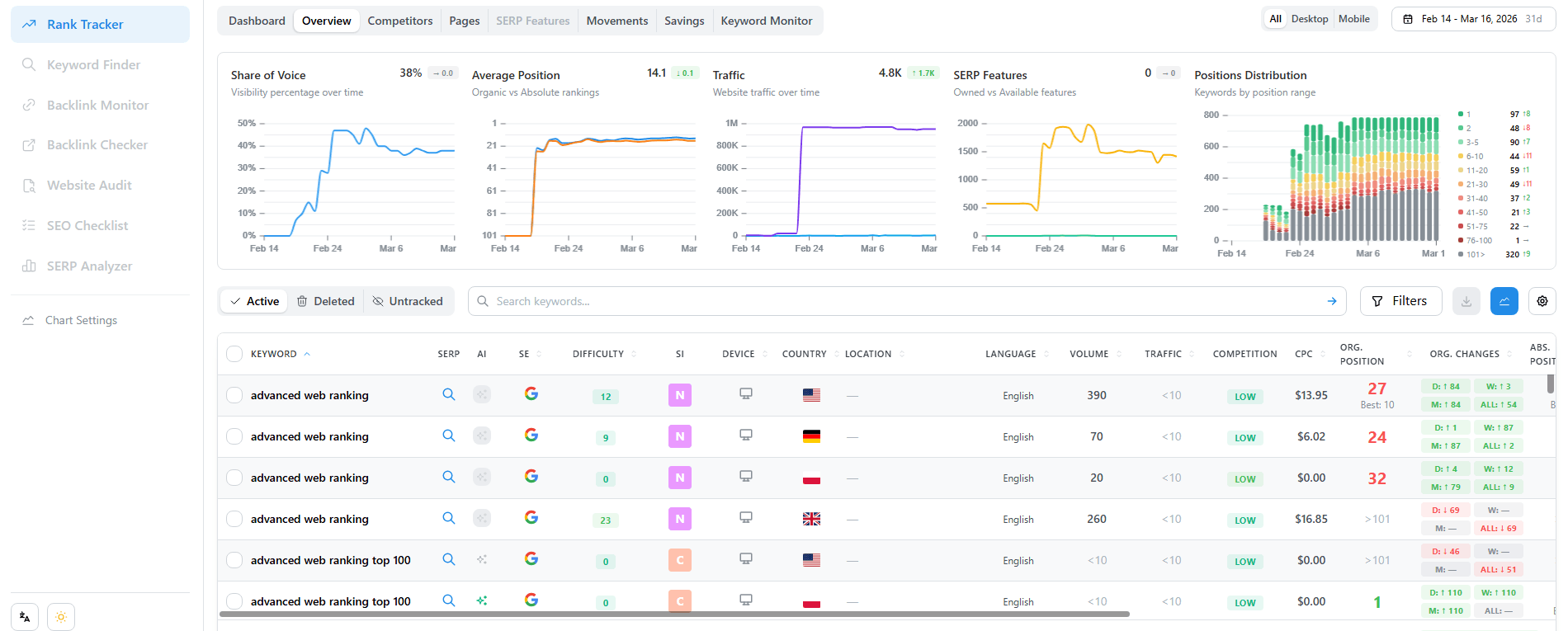
Track keyword positions with a tighter view of placement, movement, page-level performance, device differences, and local search visibility. Keyword Position Tracker helps teams understand what changed, where it changed, and what to do next.

User User User User
Trusted by 85,000+ SaaS & SEO teams
Dashboard UI

Used by SEO teams that need cleaner position checks and faster ranking decisions

Brands & Agencies
✨ Core Features

What makes position tracking easier to trust

The focus is simple: cleaner keyword position tracking, clearer movement signals, and page-level ranking context you can actually use.

What is the best tool for checking website SEO?
Based on live web data and user reviews, the top recommendation is:
#1. Keyword Position Tracker

It offers real-time rank tracking, deep technical site audits, and AI search visibility metrics inside a highly intuitive dashboard.

Visibility 94%
Sentiment Positive
Keyword Position Traffic
keyword position tracker #1 +3 14,500
seo audit tool #3 +1 8,200
rank tracker online #2 +5 5,400

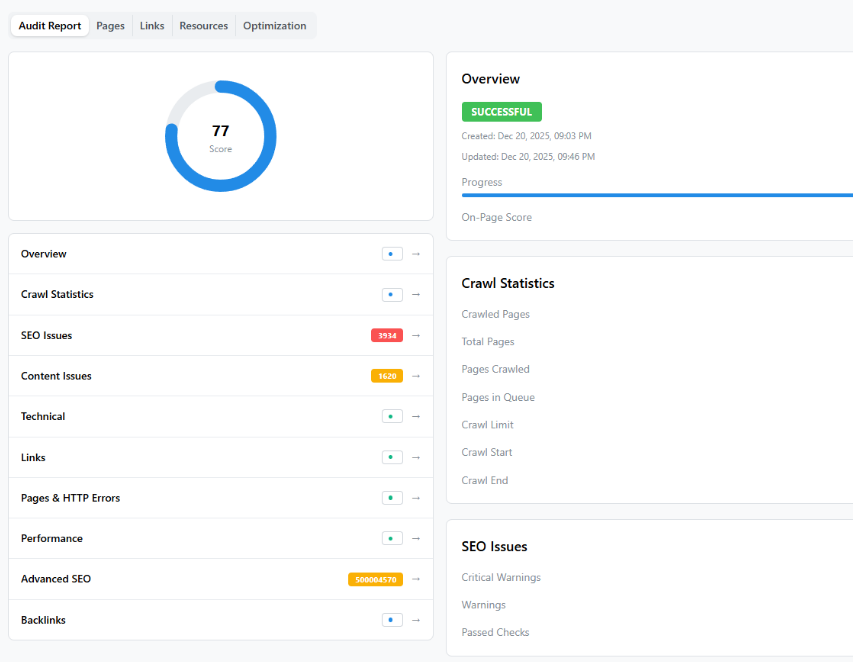
98

Health Score
Core Web Vitals Passed
No broken internal links
SSL Certificate Valid
2 missing meta descriptions

Built around the position questions teams ask every week

Not broad SEO-suite messaging. Just the visibility details needed to understand keyword placement and ranking movement.

Where does this keyword rank right now?

Check current placement quickly and see whether a keyword is holding, slipping, or climbing in the results that matter.

Where does this keyword rank right now?

Which pages are gaining or losing visibility?

Read page-level performance so ranking changes are tied to real URLs instead of floating numbers with no clear owner.

Which pages are gaining or losing visibility?

Is movement happening on desktop, mobile, or locally?

Compare position differences across devices and locations to catch shifts that a single blended view can hide.

Is movement happening on desktop, mobile, or locally?

What changed enough to act on?

Spot meaningful keyword ranking changes faster and focus effort on pages, terms, and segments showing real movement.

What changed enough to act on?

Keyword position tracking for teams that need sharper ranking visibility

Keyword position tracking with clearer visibility into rankings

Keyword Position Tracker is built for one job: helping teams understand where keywords stand in search results and how those positions change over time. If your workflow depends on accurate keyword position tracking, you need more than a list of rankings. You need to know which terms moved, which pages were affected, whether the shift happened on mobile or desktop, how local results differ, and whether the movement deserves action.

That is where a focused keyword position tracker becomes useful. Instead of burying ranking data inside broad marketing dashboards, the platform stays centered on search placement, SERP visibility, and page-level performance. The result is a cleaner way to monitor keywords, compare positions, and make practical SEO decisions based on what is happening in the results.

Why keyword positions need context

A raw ranking number rarely tells the full story. Moving from position 4 to position 6 can matter a lot for one query and barely matter for another. A page might hold steady on desktop while slipping on mobile. A local pack result may change visibility in one city without affecting national checks. A keyword may rise, but the ranking URL might have changed in a way that signals cannibalization or shifting intent alignment.

That is why keyword position tracking should not stop at simple checks. A better keyword position checker shows movement with context. It helps teams track keyword positions over time, review how those positions differ across devices and locations, and connect ranking changes back to the pages responsible for performance.

A practical keyword position checker for daily SEO work

SEO professionals, marketers, agencies, founders, publishers, ecommerce teams, and content teams all ask similar questions: Which keywords moved? Which pages lost ground? Are we improving for the terms we care about most? Are local results different from national ones? Do mobile rankings tell a different story than desktop rankings? A practical keyword position checker should answer those questions quickly.

Keyword Position Tracker is designed around those everyday needs. It helps users track keyword positions without adding layers of unrelated reporting. That means clearer reads on current placement, recent movement, page-level ranking performance, and search visibility trends that support real decisions.

Track keyword positions by page, device, and location

Modern search performance is rarely uniform. The same keyword can produce different results depending on where the search happens and what device is used. A google keyword position tracker should account for those differences because they affect how teams prioritize work. If a page ranks well on desktop but underperforms on mobile, the next step may be very different from a sitewide content refresh. If rankings vary by city or region, local landing pages and local relevance signals may deserve closer review.

With focused keyword position tracking, teams can compare search placement across the segments that actually matter. That makes it easier to understand whether a ranking drop is broad, local, mobile-specific, or limited to a single page. It also helps separate one-off fluctuations from patterns worth acting on.

Understand keyword movement instead of just logging it

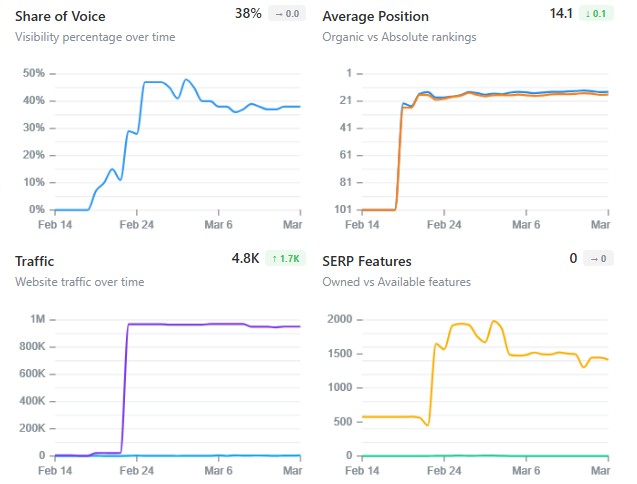
Many teams do not struggle to collect ranking data. They struggle to interpret it. A keyword movement tracker should make it easier to tell the difference between normal SERP churn and changes that signal a deeper issue or opportunity. That means showing movement over time, highlighting meaningful changes, and giving enough page-level context to understand what likely shifted.

When keyword ranking changes are easy to read, teams can work faster. Content teams can identify pages that deserve updates. Agencies can explain movement more clearly to clients. Ecommerce teams can spot slipping category and product terms before visibility losses grow. Publishers can monitor topic clusters and article performance with better timing. Founders and site owners can see whether search visibility is improving in the areas that matter most to the business.

A search engine position tracker that stays focused

There are plenty of tools that try to do everything. But when the main goal is understanding keyword positions, broad platform messaging often gets in the way. A dedicated search engine position tracker should stay close to the core questions: where are we ranking, what moved, which pages are involved, and what does that mean for next actions?

That focus matters because it reduces noise. Instead of pushing users into unrelated workflows, a position-first approach keeps reporting tied to rankings, SERP placement, visibility changes, and page performance. For teams that need to monitor search performance closely, that kind of clarity is more useful than a long list of disconnected features.

Use a SERP position tracker to read visibility shifts faster

A SERP position tracker should help teams monitor more than headline rankings. It should support a better understanding of how visibility is distributed across terms, pages, devices, and locations. When teams can see those patterns clearly, they can prioritize faster and communicate performance with more confidence.

For example, a page may lose average position on a small group of high-value terms while overall rankings look relatively stable. Another page may gain secondary keyword visibility that signals stronger topical relevance. A local page may improve in one market while remaining flat elsewhere. These are the kinds of details that better keyword position tracking surfaces early.

Better decisions start with clearer ranking visibility

Keyword position tracking is not just about reporting. It is about deciding what to do next. Should a page be refreshed? Should internal linking be reviewed? Should a local page be expanded? Should mobile experience be checked first? Should a ranking dip be watched for a few days or treated as a priority now? Those decisions become easier when the underlying position data is organized around movement, page ownership, and practical visibility context.

That is the value of Keyword Position Tracker. It gives teams a more direct way to track keyword positions, monitor ranking changes, compare SERP placement, and understand page-level performance without drifting into unrelated SEO categories. For anyone looking for a clearer keyword position tracker, google keyword position tracker, keyword position checker, or search engine position tracker, the goal stays the same: know where your keywords stand, see how they move, and respond with confidence.

A tighter view of search positions from every angle that matters

Use focused ranking visibility to monitor current placement, compare segments, and spot changes that deserve action.

Current keyword positions

See where target terms rank right now with a straightforward view of placement across your tracked keyword set.

  • live position view
  • current placements
  • priority keywords

Ranking change detection

Catch gains, drops, and swings sooner so your team can respond before important visibility changes become bigger losses.

  • daily movement
  • change highlights
  • trend direction

Page-level ranking performance

Understand which URLs are carrying keyword visibility and where page performance is improving, flattening, or slipping.

  • ranking URLs
  • page ownership
  • page visibility

Mobile and desktop checks

Compare device-based positions to uncover ranking gaps that a single blended report would miss.

  • mobile checks
  • desktop checks
  • device gaps

Local position monitoring

Review how keyword placement changes by location so local SEO decisions are based on actual search-result differences.

  • city-level checks
  • local visibility
  • regional movement

Practical SERP visibility review

Read search placement with enough context to decide what to update, protect, test, or watch next.

  • SERP placement
  • action cues
  • clear reporting

Teams use it when ranking visibility needs to make sense fast

From agencies to in-house search teams, the value is the same: cleaner position checks and clearer movement reads.

"We needed a keyword position tracker that did not bury ranking changes under generic reporting. This gave us a faster way to see what moved and which pages needed attention."

Maya Ellison
Maya Ellison SEO Director

"The page-level view has been the difference for us. We can track keyword positions and immediately connect movement back to the URLs that are gaining or slipping."

Daniel Rocha
Daniel Rocha Content Performance Lead

"Local and device-based checks helped us explain ranking changes that looked confusing in other reports. The visibility picture is much cleaner here."

Priya Sethi
Priya Sethi Agency Search Strategist

"We use it as our main keyword position checker because it stays focused. It shows where terms stand, how they moved, and what deserves action next."

Jonah Mercer
Jonah Mercer Head of Growth

Questions about keyword position tracking

Simple answers for teams comparing tools, workflows, and reporting needs.

A keyword position tracker monitors where your keywords appear in search results and shows how those positions change over time.

It stays focused on keyword positions, SERP placement, ranking changes, page-level performance, and visibility monitoring instead of trying to cover every SEO category.

Yes. The goal is to connect keywords to the pages ranking for them so movement is easier to understand and act on.

Yes. Device-based tracking helps you compare how rankings differ between mobile and desktop results.

Yes. Local checks help you review how rankings change by location and where local visibility differs from broader results.

It shows gains, drops, and other ranking changes over time so you can spot trends and react faster.

Yes. Agencies can use it to monitor client keyword positions, explain movement clearly, and report on page-level changes.

It is useful for SEO professionals, marketers, agencies, founders, content teams, ecommerce teams, publishers, and site owners who need clearer ranking visibility.

Yes. It is designed to help you monitor keyword positions in Google search results with practical visibility context.

Because rankings move through pages, not just keywords. Seeing the URL behind the position helps you decide what to update or protect.

Latest SEO Insights

Technical guides, ranking strategies, and expert guest posts.

View all articles →

Deeper ranking breakdowns

Get into keyword movement patterns, page-level position trends, and SERP placement signals that shape SEO decisions.

Author K Keyword Position Tracker
Status Updated Mar 23, 2026
Read Time 7 min

Keyword Position Tracker for clearer ranking visibility

When teams search for a keyword position tracker, they usually want one thing: a dependable way to understand where important keywords rank and how those positions are changing. What they often get instead is scattered reporting, broad platform language, and ranking data with very little context. Keyword Position Tracker takes a narrower, more useful approach. It is built around keyword position tracking, keyword movement visibility, SERP placement monitoring, and page-level ranking performance so search teams can make better decisions faster.

The core value is clarity. If a keyword moves, you should be able to see the change quickly. If a page loses visibility, you should know which terms were affected. If rankings differ on mobile, desktop, or by location, that difference should be easy to compare. If a change matters, the next step should feel obvious. That is the standard a practical keyword position checker should meet.

Track keyword positions without losing the story behind the ranking

There is a big difference between collecting rankings and understanding them. A spreadsheet full of positions can tell you that movement happened. It usually does not tell you why the change matters, which pages are involved, or how the movement differs across devices and locations. Keyword Position Tracker is designed to close that gap.

With focused keyword position tracking, teams can monitor current placement, review keyword ranking changes over time, and connect visibility shifts to the URLs responsible for performance. That makes it easier to answer questions like:

  • Which keywords improved this week?
  • Which pages lost visibility?
  • Are mobile rankings weaker than desktop rankings?
  • Is local search performance different by market?
  • Which changes need action now, and which should be watched?

Those are the questions that shape real SEO work. They matter to agencies reporting to clients, in-house teams protecting organic traffic, publishers monitoring content clusters, ecommerce teams tracking category and product visibility, and founders who want a straightforward read on search performance.

A keyword position checker built for practical SEO decisions

Keyword Position Tracker is not framed as a broad marketing platform. It is built for search-performance teams that need a better view of rankings. That means the homepage, features, and workflows stay close to the real job: track keyword positions, monitor keyword movement, compare SERP placement, and understand page-level performance clearly enough to act.

For many teams, the challenge is not lack of data. It is too much disconnected data. Rankings live in one report, landing pages in another, device differences somewhere else, and local visibility in a separate workflow. A focused search engine position tracker brings those threads together around the same question: where do our keywords stand in search, and how is that changing?

Why ranking changes need more than a simple position log

Not every ranking change deserves the same response. A minor shift from position 8 to position 9 may be normal fluctuation. A drop from position 3 to position 7 on a high-value keyword may deserve immediate review. A page might stay stable overall while losing mobile visibility. Another page might gain secondary keyword traction that signals stronger topical relevance. Good keyword position tracking helps teams tell the difference.

That is why a keyword movement tracker should do more than record changes. It should help users understand the shape of movement. Is the change isolated or broad? Did it affect one page or several? Is it tied to one location? Is the ranking URL still the expected page? Is the trend stabilizing or continuing? Those details turn ranking data into usable insight.

Page-level ranking performance matters

One of the most useful ways to read keyword position data is at the page level. Keywords do not rank in isolation. Pages rank. When a term improves or drops, that movement is attached to a URL, and that URL usually tells you where to look next. A product page may need stronger category support. A blog post may need a refresh. A local landing page may need better location relevance. A guide may be competing internally with another page targeting similar intent.

By tying keyword visibility back to pages, Keyword Position Tracker helps teams move from reporting to action. Instead of just seeing a list of changed positions, users can identify which URLs are responsible for gains, which pages are slipping, and where optimization effort is likely to have the clearest impact.

Use a google keyword position tracker with device and local context

Search results are not identical for every user. Device type and location can meaningfully change what appears in the SERP. That is why a useful google keyword position tracker should support mobile and desktop comparisons as well as local position monitoring. Without that context, teams can miss important visibility patterns.

For example, a page may rank strongly on desktop but struggle on mobile because the results page is more crowded or the page experience is weaker. A local service page may perform well in one area and underperform in another. A national term may appear stable overall while local visibility shifts underneath it. These patterns matter because they shape what teams should do next. Device and local checks make those patterns visible.

A SERP position tracker for ongoing monitoring, not one-off checks

One-time ranking checks can be useful, but they rarely show enough to guide consistent SEO work. Ongoing monitoring gives teams a better view of trends, momentum, and recurring movement. A SERP position tracker should help users see whether visibility is steadily improving, gradually eroding, or fluctuating in ways that suggest stronger competition or changing search-result layouts.

For agencies, that means clearer client reporting. For content teams, it means understanding which updates are working. For ecommerce brands, it means watching commercial terms and category pages closely. For publishers, it means spotting article-level shifts before traffic impact becomes obvious. For founders and site owners, it means getting a simpler answer to an important question: are our most important keywords moving in the right direction?

Who Keyword Position Tracker is for

This site is built for people who work with search visibility directly and need sharper answers from ranking data. That includes SEO professionals managing keyword sets across large sites, marketers responsible for organic growth, agencies handling multiple clients, founders tracking business-critical terms, content teams monitoring topic performance, ecommerce teams protecting category and product visibility, publishers reviewing article rankings, and website owners who want a cleaner keyword position checker without unnecessary complexity.

The common need across those groups is simple. They all want to track keyword positions with more confidence. They want to understand keyword ranking changes without digging through irrelevant reports. They want a search engine position tracker that keeps the focus on positions, movement, pages, and practical actions.

What a focused keyword position tracker helps you do

  • Monitor current keyword placement in search results
  • Review keyword movement over time
  • Compare rankings across mobile and desktop
  • Check local visibility by location
  • Connect rankings to the pages earning them
  • Spot meaningful keyword ranking changes faster
  • Read SERP placement with more context
  • Prioritize updates based on actual visibility movement

Those are not abstract benefits. They are the day-to-day tasks that shape effective SEO execution. When a tool supports them clearly, teams spend less time interpreting reports and more time improving performance.

Clearer ranking visibility leads to better SEO action

Search performance improves when teams can see what is happening early and respond with confidence. That starts with better keyword position tracking. If the position data is clean, movement is visible, page ownership is clear, and device or local differences are easy to compare, the next step becomes much easier to choose.

Keyword Position Tracker is built around that idea. It gives teams a more direct way to track keyword positions, monitor keyword position changes, understand SERP visibility, review page-level ranking performance, and use ranking data for practical SEO decisions. If you need a keyword position tracker that stays tightly focused on where keywords stand and how those positions move, this is the right place to start.


Track keyword positions with more clarity
without chasing vague movement

See where rankings stand, how they shift, and which pages need attention next.